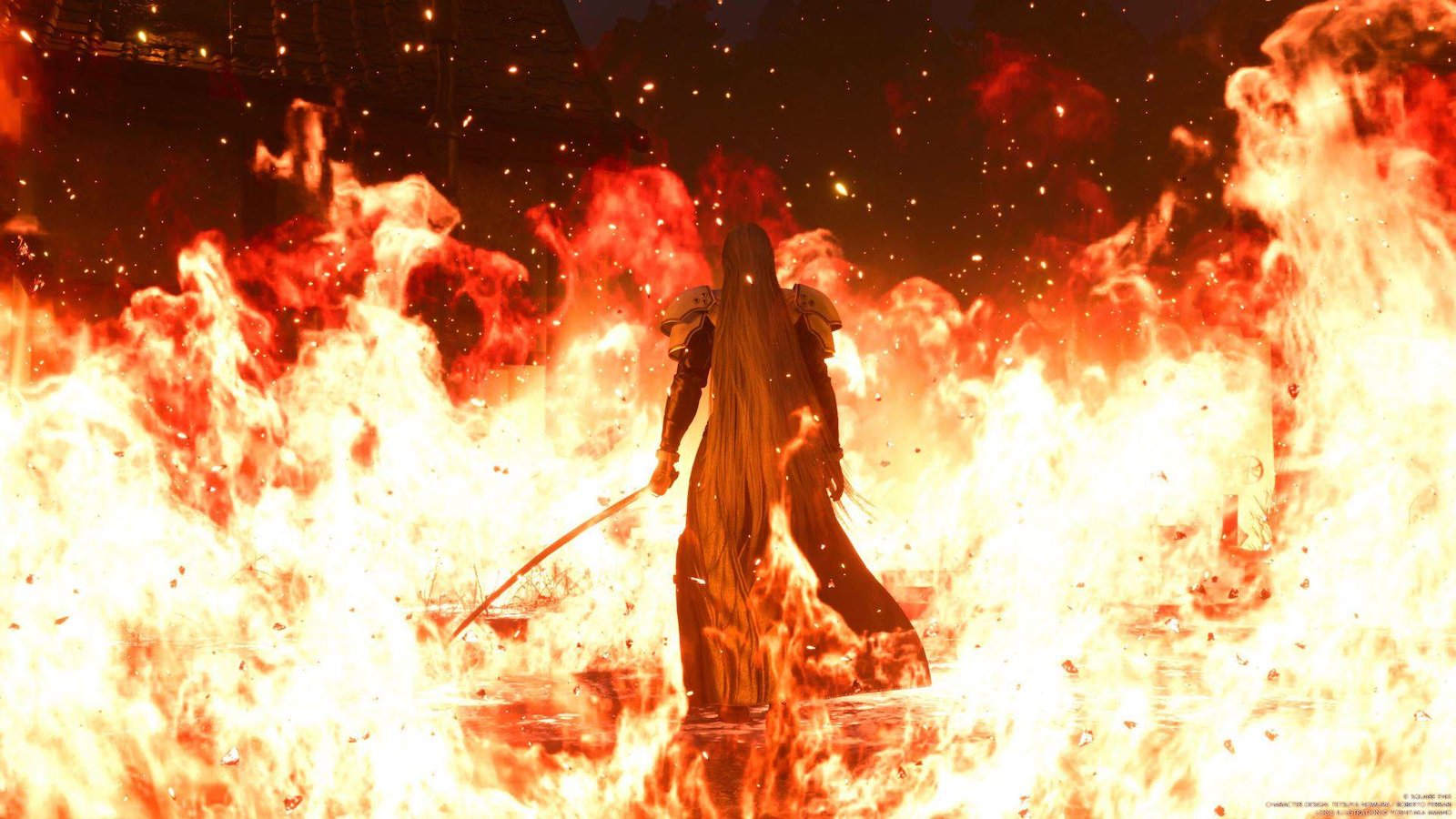
FINAL FANTASY VII REBIRTH
Artifact #3: Box Art
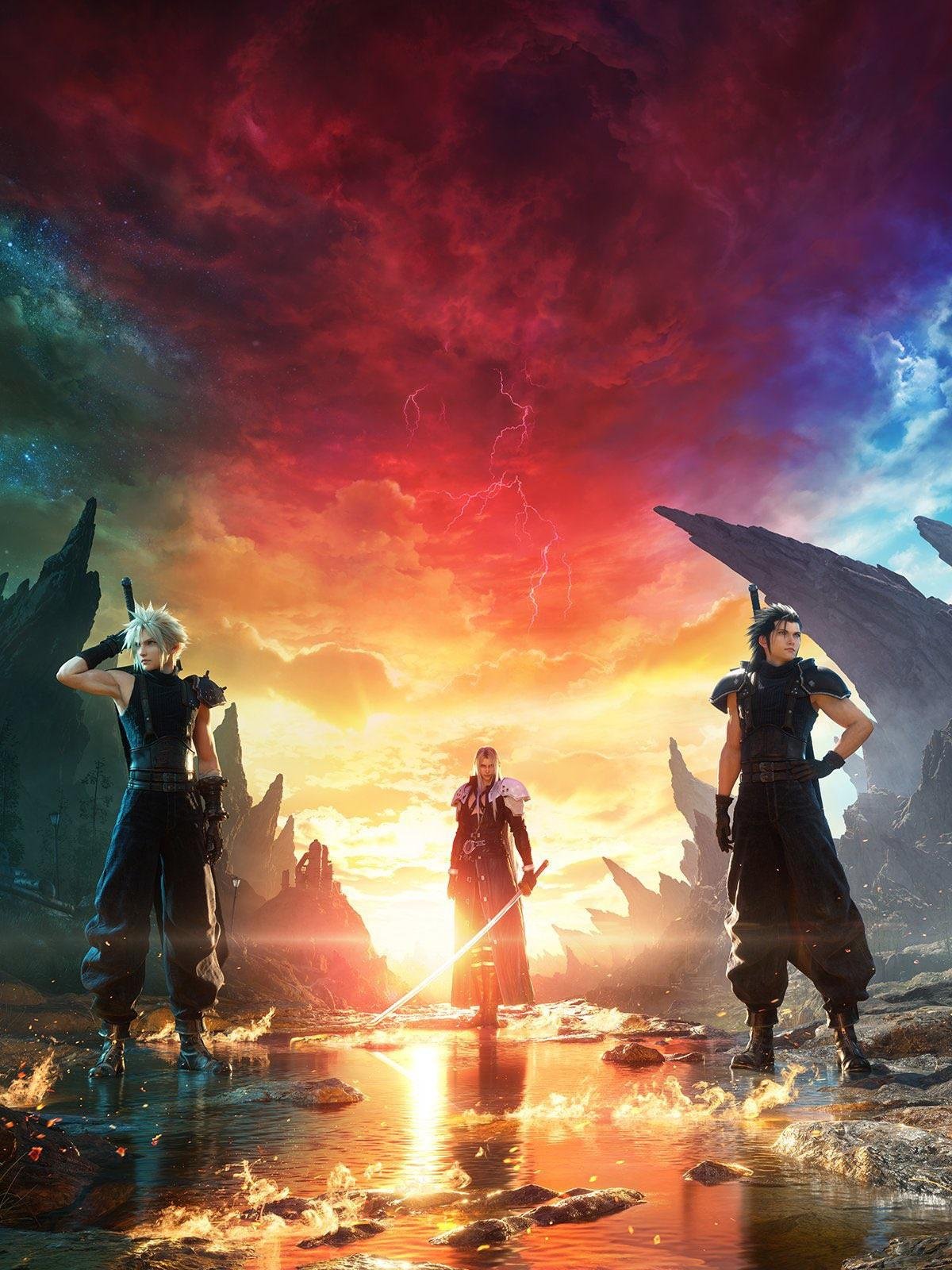
Released February 29, 2024, Final Fantasy VII Rebirth is the second installment in the Final Fantasy VII Remake trilogy. This trilogy introduces a new twist to the series by incorporating a multiverse/parallel realities into the story. Pictured in the foreground is Cloud Strife (Left), Sephiroth (Center), and Zack Fair (Right), viewed from a low-angled perspective. All three of them used to be a part of SOLDIER, Shinra Electric Power Company’s elite task force, hence why they all wear similar clothing styles. Sephiroth was the best, strongest fighter in SOLDIER 1st Class and respected by everyone. However, upon learning that he was an experiment to create a powerful human-ancient hybrid which was conducted by his own father, Sephiroth grew to vehemently hate humanity and killed everyone in the nearby village of Nibelheim; thus, Sephiroth became the main antagonist of Final Fantasy VII. Sephiroth dons a large black coat with silver pauldrons, black pants, black boots, and no shirt. He wields a 6ft sword known as Masamune and long, flowing silver hair. The illustrator poses him with square in the center and makes him look directly at the audience. Similarly, Zack is SOLDIER 1st Class. Zack wears the 1st Class uniform of black boots, black pants, black shirt, and sleek pauldrons. He wields the Buster Sword and spiky, semi-short black hair. The illustrator poses Zack with one arm on his hip, a confident facial expression, and facing to the audience’s right. On the other hand, Cloud left Shinra’s SOLDIER program to become a mercenary. Cloud takes after Zack and wears black boots, indigo pants, indigo shirt, a forearm cuff, and a single, spiky pauldron. He wields Zack’s Buster Sword and spiky, semi-short blond hair. He is posed with his unarmored arm on the sword and a serious expression, facing to the audience’s left. The ground beneath the subjects is very open and expansive with most of the ground being covered by a shallow river, littered with stones, rocks, and patches of fire. In the background, the sky is segmented into four distinct sections. Above Cloud, a cloud-dense murky sky can be observed and is much darker than the other segments. Above Sephiroth, an ominous crimson sky is present with circling dark clouds and periodic lightning strikes; this cloud formation takes up around one fourth of the cover. Above Zack lays a clear blue sky with moderate cloud coverage. Behind all three subjects is a sunset or sunrise and is the brightest segment of the sky, with the sunlight emphasizing Sephiroth and Masamune. Another notable detail of the background is the environment chosen for each character. Cloud’s chosen environment is Nibelheim, his home town; specifically, the stairs to the Shinra Manor are shown which are lined with trees and lamp posts. Sephiroth stands in front of the valley that travellers use on the way to Mt. Nibel and the Nibel Reactor. The Nibel Reactor is also emphasized with sunlight and stands out due to its smooth and metallic surface against the rocky cliffs of the Nibel Region. Zack also stands in a general spot of the Nibel Region.
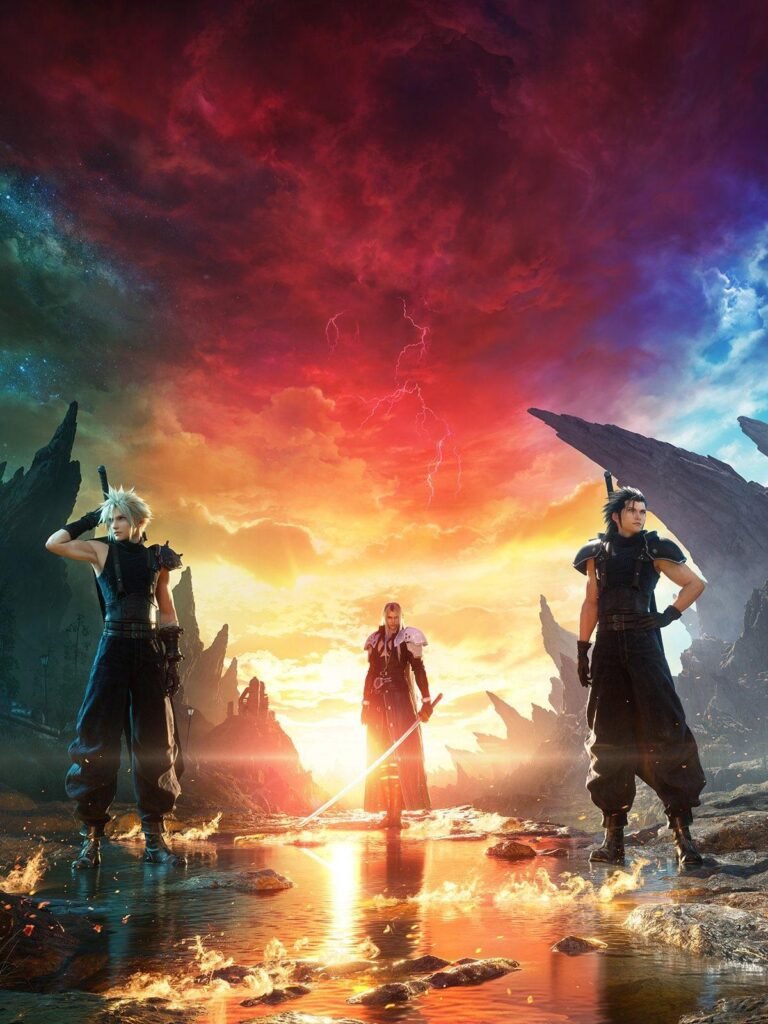
This artifact illustrates the changes to the narrative element of Final Fantasy VII Rebirth. The low-angled perspective helps the audience view the subjects in a more imposing way while letting the audience observe more of the sky; this helps signify that these are going to be the most influential and significant characters of the game. The tetradic color scheme of the background develops motion within the image by utilizing the sun to make Sephiroth the primary focus of the image. From the anamorphic flare, the eye can naturally follow Masamune or the lens flare to Cloud or Zack. With all the subjects and background elements positioned vertically or diagonally, the eye will scan the image in an up-down pattern and end up following the circling crimson clouds/lightning back to Sephiroth. By allowing the audience to scan the image, the box art helps reveal the numerous forces that will be appearing in the story through the use of a tetradic color scheme. The four-part sky also mimics Rebirth’s parallel universe focus; each color zone signals a unique narrative direction, visually preparing the audience for alternate timelines and diverging character paths. Additionally, the tetradic colors, along with the design of each character, help demonstrate the personalities of each subject. The illustrator paints Sephiroth as the main antagonist of Final Fantasy VII Rebirth by placing a red thunderstorm behind him and poses him directly at the camera. Red is often associated with “evil” or “carnage”, which Sephiroth is no stranger to, and placing him in the center with a front-facing stance helps develop an unsettling feeling within the audience. This characterizes Sephiroth as intimidating and the instigator of Rebirth. Meanwhile, Zack and Cloud are on either side of Sephiroth and have similar design styles; thus, the audience can deduce that they share the role of protagonist against Sephiroth; however, because the trio share SOLDIER design elements, the audience can further deduce that there is a complex struggle between good and evil due to their unique history they share. The illustrator paints Cloud in Rebirth as aloof and mysterious by utilizing a green, murky sky and a dense layer of fog covering the stairs to Shinra Manor, which are often associated with mystery and confusion; the illustrator also depicts him as serious, with a stern expression, and that he is on high alert by placing his hand on his sword. Contrary to Cloud, Zack has the opposite impression. The bright blue sky, hand on hip, and determined look gives the audience the impression that Zack is optimistic and confident for whatever task he pursues. An interesting choice to note is that Zack is included in the cover. In the original Final Fantasy VII, Zack’s story is greatly looked over, extremely short, and is easily missed by the player if they are not actively seeking to learn his story. By incorporating Zack into the main box art, developers let fans know that they can expect Zack to have more appearances and greater significance to the reimagined story. This emphasis signals a shift from Final Fantasy VII Remake’s fate-driven storytelling to Rebirth’s interest in the multiplicity and divergence of a singular canon timeline. Similarly, the setting of the art is unique. While the original and remake use Midgar as the poster setting, Rebirth uses Nibelheim and the Nibel Region; this implies that Nibelheim will be heavily explored and extremely important in Rebirth and will shift away from Midgar. Rebirth’s box art illustrates the developers as change-oriented, fleshing out side characters and environments for the contemporary audience while maintaining character personalities and dynamics that fans associate with the original installment.
Artifact #4: Gameplay Screenshot
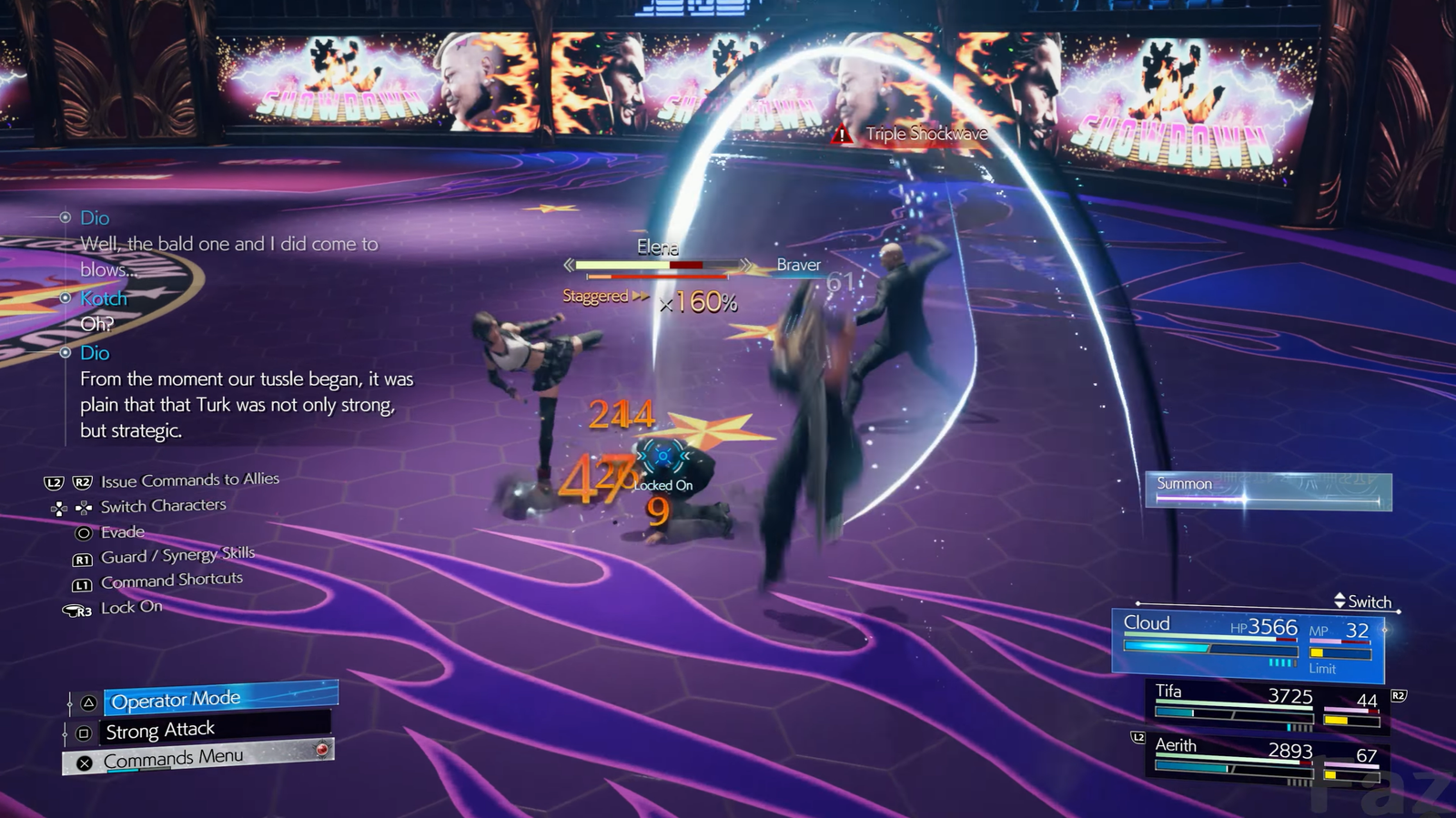
The original Final Fantasy VII released in 1997 on the PlayStation. With twenty-seven years of controller and hardware advancement between 1997 and 2024, Rebirth’s developers are given more creative freedoms when designing combat mechanics and gameplay. Shown above are Cloud, Tifa, and Aerith fighting the Turks, Rude and Elena, in a grudge rematch at Dio’s Musclehead Colosseum. In the foreground, Cloud and Tifa wail on a fatigued Elena. Tifa uses a normal attack roundhouse kick and Cloud uses Braver, a heavy falling sword slash ability. Elena has sustained significant damage and has a “Staggered” title beneath her health bar followed by x160% multiplier; the Staggered bar has almost depleted. Orange numbers surround her character model while the blue words “Locked On” and a little blue crosshair-and-target appear directly on her model. Cloud has the word “Braver” in blue above his head and Rude has the words “Triple Shockwave” in red above his head, preceded by a red, triangle warning symbol with an exclamation point in the center. To the right, the summon bar and character stats are presented. The summon bar is currently filling up and the player can summon a powerful creature from their arsenal once the bar is full. Underneath the summon bar, the character stats show each character’s remaining HP and MP, LIMIT Gauge, ATB Gauge (horizontal and under HP bar), and Synergy Gauge (vertical bars under the ATB Gauge); the active character is Cloud, denoted by his name card being highlighted in blue. Tifa and Aerith have an R2 and L2 next to their card respectively, alerting the player they can be issued orders using their respective button (also shown on left side). To the left, a Commands Menu is available along with Operator Mode and Strong attack. Each character has a unique combat ability for their normal attacks; for example, Cloud is currently in Punisher Mode using Strong Attacks and has the choice to switch back and forth with Operator mode, which uses quicker/weaker normal attacks. In the Commands Menu, the character’s physical/magic abilities and synergy skills lie. Here, ATB can be expended for powerful physical/elemental abilities and synergy charges for synergy abilities. Above these combat characteristics are helpful tips from the game to remind the player of their options such as guarding, dodging, and locking on. To the upper Left, commentary is given by people not actively in combat. As the combatants fight, Dio and Kotch, the owner of the establishment and an announcer, banter about their experiences; these dialogues are not important to the fight at hand, but are entertaining to listen to. The fighters brawl in an expansive, grandiose arena, decorated with deep purple flames on the floor, Dio’s logo in the center of the arena, and promotional poster walling the arena.
This artifact showcases the reinvention of the mechanical element, specifically combat, of Final Fantasy VII Rebirth. In the original Final Fantasy VII, all combat was turn based, meaning every combatant had a set attack order and the attack loop would keep repeating until the player or enemy won. In Rebirth, the player and the AI operating the teammates can attack simultaneously; on top of that, the player and enemies can attack concurrently, shown above with Rude and Cloud both using ATB abilities. The Staggered effect was introduced in Final Fantasy VII Remake and takes effect once the enemy has been pressured enough; once dazed, Staggered enemies take more damage, as depicted by the x160% multiplier and the deep orange numbers. Normal attacks have been improved in the remake trilogy into normal attack strings. In FFVII, the normal attack consisted of a singular slash or punch, unless the player had the Double Cut Materia which allowed the character to perform 2 normal attacks per turn or 4 normal attacks per turn if the Materia was level 2. In the remake trilogy, normal attacks are now a string of multiple attacks by default and can be changed to match the pace of combat, like Cloud’s Punisher and Operator mode. The inclusion of the ATB Gauge allows the player to use grand abilities that do not expend precious resources such as HP or MP, which was not present in FFVII. Another significant change to combat is the ability to summon. In FFVII, the player could spend MP to summon any Summons equipped on the active character and could summon multiple Summons throughout the battle, allowing the player to use numerous Summons as long as the active character had enough MP. In the remake trilogy, the player is limited to equip only one Summon per character and summon one Summon throughout the entire battle; in addition, the player must wait to summon until the Summon pop-up appears on the right and fills the meter completely, then use ATB to activate the Summon. Once summoned, the Summon attacks with the player while expending ATB for high-damage moves until the meter depletes, versus the one instance of damage then departure in FFVII. The character stat bar has also been optimized to take up less of the screen while still presenting clear data to the player off to the side. Rebirth introduces Synergy Abilities to combat, allowing two characters to perform powerful attacks in unison if the characters involved have enough Synergy Charges. Combat has been designed to be fast-paced in the remake trilogy, hence the inclusion of hints on the left side that allow the player to be reminded of their options while performing under pressure. Because combat is now faster-paced, the domain in which to fight has been expanded, giving the player lots of room to run, roll, and guard; this can be seen above where all members of the fight are only gathered in a little section of the colosseum. Additionally, combat has been designed with more immersion by using character commentary by parties inside (not pictured) and outside combat. The shift from predictable turn-based gameplay to gameplay centered around spatial awareness, quick decisions, and greater resource management transforms combat into a series of dynamic encounters that emphasize timing, coordination, and adaptability from the player. This gameplay screenshot demonstrates that by utilizing a multitude of combat mechanics, such as ATB, Synergy Abilities, and augmented mobility, Rebirth’s combat directors update the battles to contemporary gameplay standards while reassuring fans that the core identities of Final Fantasy VII’s combat remain intact.
Ultimately, Rebirth’s box art and the gameplay screenshot reveal Final Fantasy VII Rebirth is reinvented around the modernization of its narrative and combat mechanics while emphasizing the continuity of its recognizable characters and gameplay characteristics.
Works Cited
- Microsoft Copilot was in the composition of the artifact descriptions, for editing purposes. Copilot offered conciseness and clarity suggestions and checked spelling/grammar
Artifact #3: Box Art
- Nomura, Tetsuya. 08 Oct. 2023. Accessed 14 Feb. 2026.
Artifact #4: Gameplay Screenshot
- Faz Faz. “ Elena & Rude and Rufus Boss Fight – Final Fantasy 7 Rebirth.” YouTube, YouTube, 29 Feb. 2024, www.youtube.com/watch?v=31Go9m2ERmg&t. Accessed 02 Mar. 2026
Header
- Heaney, Duncan. 16 Apr. 2024. FINAL FANTASY VII REBIRTH: Flashback to the Flashback Part 2 – Fall of a Hero, https://www.square-enix-games.com/en_US/news/final-fantasy-vii-rebirth-nibelheim-pt2. Accessed 22 Feb. 2026.
Explore
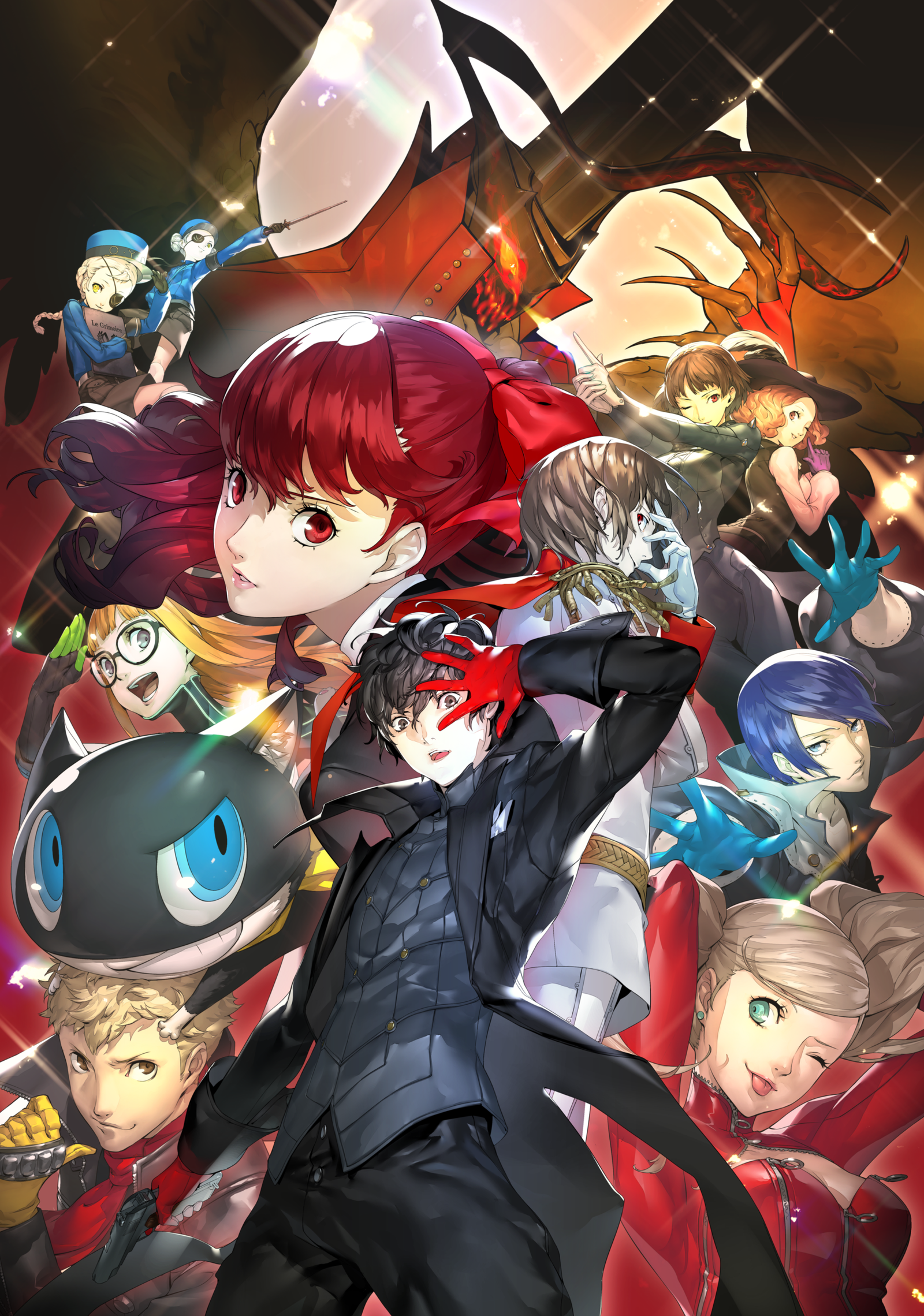
- Asgartinus. Persona 5 Royal Cover Art Enhance Resolution + PNG Version : R/Persona5, https://www.reddit.com/r/Persona5/comments/pe8j4f/persona_5_royal_cover_art_enhance_resolution_png/. Accessed 14 Feb. 2026.
- BeastXredefined. FFVII Rebirth Box Art : R/FinalFantasy, https://www.reddit.com/r/FinalFantasy/comments/1bnm1hx/ffvii_rebirth_box_art/. Accessed 14 Feb. 2026.
- Thibaut. 9 June 2024. Metal Gear Solid Delta: Snake Eater Appears Again with Lots of Gameplay, https://news.instant-gaming.com/en/articles/6836-metal-gear-solid-delta-snake-eater-appears-again-with-lots-of-gameplay. Accessed 28 Feb. 2026.